
The Serenity Prayer
God, grant me the serenity to accept the things I cannot change,
the courage to change the things I can,
and the wisdom to know the difference.
Reinhold Niebuhr
When you start searching the internet for the best puppy potty training advice, you probably are doing so after cleaning up a puddle or a pile, hopefully not on carpet, and feeling at the end of your patience. Believe me, I have been there.
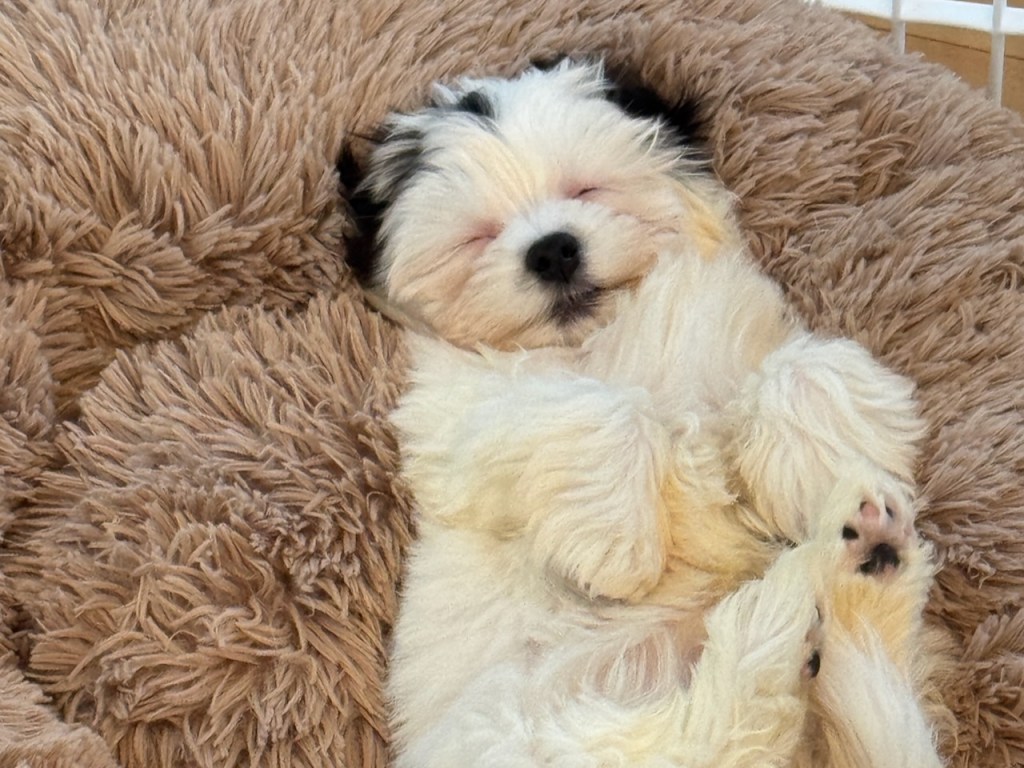
We picked up our new 11 week old, litter trained puppy on a Saturday, and in just one hour after waking up the next morning, we had cleaned up 10 small puddles on the kitchen floor. We were exhausted, and it was only 8 am.
My best advice is to take The Serenity Prayer approach. Accept the things that you cannot change. For us, it was accepting that an 11 week old, 5 lb puppy who was just separated from all that he knew and loved was too little and too overwhelmed to control his tiny bladder at first.
In the safe and familiar surroundings with his litter mates at the breeder’s home, he was reliably going potty in his pine pellet-filled litter box. With new flooring, new smells, new people, and absent the warmth of his brothers and sisters that training went right out of the window.
There were two bright spots. First, he slept through the night, which was amazing. Second, he had a strong preference for going potty outside, which was our ultimate goal. The downside was that it was that it was freezing and snowy, and he needed to go outside A LOT.
To give you an idea of just how often he needed to go out, when he was about 15 weeks old, we counted that we took him outside 18 times and he peed 54 times.
Knowing that he was sleeping through the night in his crate without accidents helped me change my daytime approach. He clearly did not want to go on his bedding, which was awesome. During the day when I couldn’t watch him closely, I had been using an 8 panel exercise pen (8 square feet in size) with his bed, litterbox, and water bowl inside. He would use his litterbox most of the time, but he was also occasionally peeing on the exposed flooring. He was still so little and needed to go out so often that for the next couple of weeks we added a second litter box to help. That bought us a little time, but it soon became time to have the courage to change.
When our little buddy started putting only his front paws in the litter box and peeing on the floor and began protesting his time in the ex pen by flinging litter everywhere like a rock star trashing a hotel room, we made a change.
It was clear that the restriction of his crate was working, and he definitely did not want to pee on his bedding. Since our ex pen was modifiable, we removed 2 of the panels to make it smaller, covered the exposed floor space with crate pads, and removed the litter box for good. The training wheels were off, and we were committed to many, many trips outside per day.
Throughout the whole potty training process, we have also kept a strict feeding and sleeping schedule to help us help him succeed. This schedule has had the added benefit of helping us learn his daily potty pattern and has contributed significantly to our success. Another trick that I learned the hard way years ago is to skip the treats and use their kibble as a reward if you can. With dogs, any dietary changes can lead to diarrhea, and no one wants that. If kibble isn’t enough of a reward, find one favorite treat and stick with it.
Our consistency and very hard work has paid off. The best part is that he is now 5 months old, weighs about 10 pounds, and is developing the ability to hold his bladder for longer and longer periods. Don’t get me wrong, we are still going outside in the freezing cold way more than I would like, but we are also seeing big improvements.
My guess is that when you clicked on this link, you were hoping for a quick fix. I’ve potty trained 5 small dogs in my life so far, and I don’t think that there is one. Every dog is different. The best potty training advice that I can give you is the serenity to accept that it’s normal for potty training to be hard. Don’t give up. Learn what works for your dog and know that your efforts will pay off in the end.
Last, but not least, keep in mind if things aren’t going well that your vet is a great ally to help rule out any parasites or infections that might be keeping your new best friend from potty training success.
 DaisyGardenCrochet