
Don’t be a quitter. I’m not sure who said that first, but Vince Lombardi’s version of “Winners never quit, and quitters never win” is baked into American culture. As far as aphorisms go, it sums up a lot about what’s needed to succeed in everyday life, but taken too literally, it eliminates the possibility of reinvention. Coach Lombardi’s own life provides a great example. Before he became one of the greatest football coaches of all time, he quit law school.
The key to knowing when to quit is recognizing the difference between when you need to pivot to something new and when you just want to quit because you’re afraid of failure. That’s a hard difference to recognize sometimes, and no one wants to be thought of as a quitter.
As a gardener, sometimes it can be hard to know whether or not to give up on a plant. I was very close to digging up my Tuff Stuff™ Red Mountain Hydrangea (Hydrangea serrata), but I am so glad that I didn’t. When we re-did our front landscaping, I had one challenging spot in a corner between the front of the house and a retaining wall where I wanted to plant a flowering shrub. The house faces the northeast and is shaded by two trees so any shrub planted in that spot would only get filtered morning sun on one side and late afternoon sun on the other. The tag for Tuff Stuff™ Red recommended sun or part shade, so I decided to give it a try.
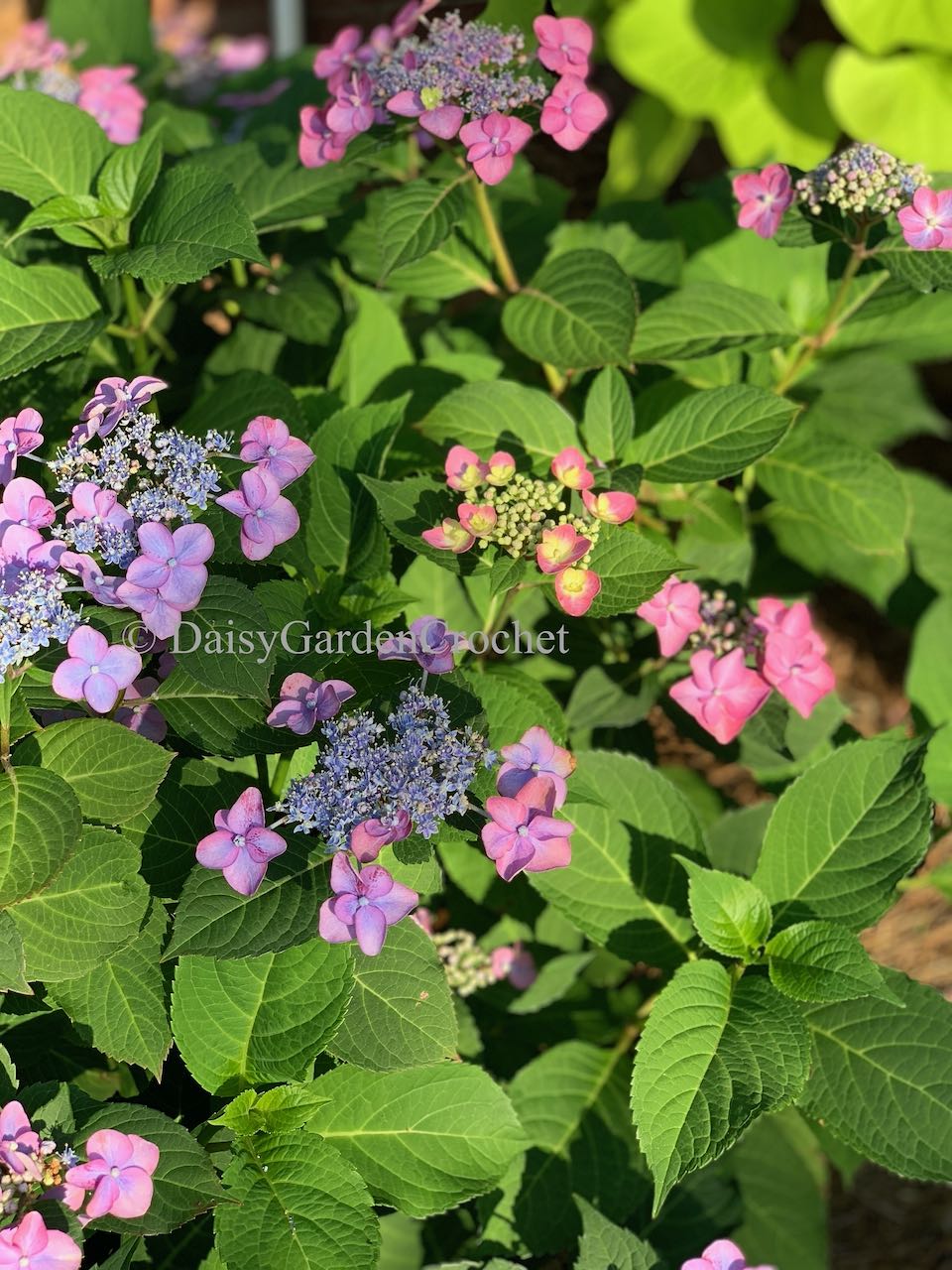
I planted it in the spring of 2019, but it didn’t bloom or visibly grow in size at all that year. That didn’t bother me because I knew that I had put it in a tough location, and I figured that it was working hard underground establishing its root system. When 2020 rolled around and it stayed tiny and didn’t bloom, I started searching for a better plant for that spot. Lucky for me I was having a hard time finding a different shrub that met all of my criteria, and in 2021, the magic happened. What a gorgeous shrub. The lovely bright green foliage perfectly complemented the pink and green lacecap flowers. This spring brought another surprise that you can see in the photo.
The picture at the top of the blog shows how this year some of the blooms were pink and green while others were pinkish purple and blue. When I read the fine print about the plant on the Proven Winners website, it indicates that the flower color will vary depending on the soil pH. Flowers will be pink at alkaline pH and blue at acidic pH. Interestingly, the pH itself isn’t what determines the flower color, it is the availability of aluminum in the soil. According to the University of Georgia Extentsion website, acidic pH values make aluminum more soluble in water and able to be taken up by the plant’s root system. So, while I object to the misleading addition of “red” in the name, I have to admit that I didn’t read the fine print. Always read the fine print.
The pinkish purple and blue flowers are beautiful, but I prefer the pink and green combo. This fall I worked lime into the soil around the shrub, and I will report back on the flower color in the spring. That is, if it does bloom this year after our epic cold snap. The plant tag says that it is hardy to -20°, but The Missouri Botanical Garden’s website says that Hydrangea serrata might be susceptible to hard winters, so at the very least, this year will be a good trial of the plant. I will keep you posted.
Editor’s Note: The cold snap in December 2022 resulted in only 3 flowers on the shrub in the summer of 2023. Because the hydrangea was hurt by the cold snap, I did not amend the soil with lime in the fall of 2023. This summer, 2024, the shrub is in fabulous full bloom and the flowers are pinkish-purple in color. I will try amending the soil with lime for a second time this fall.
So if you’re trying to grow a flowering shrub that requires full sun in a partially shady spot without any success, it might be time to give up and move it. A mountain hydrangea might be a much better choice if you are willing to be patient.
A Flowering Shrub for Shade, the Tuff Stuff™ Red Mountain Hydrangea
 DaisyGardenCrochet