

The last time we went on vacation the first thing that I noticed when I walked in the door was a slight buckle in the hardwood in the hallway. The buckle was a hint that the refrigerator was leaking. My deeply relaxed vacation vibe was over in an instant.
I must be a closet optimist because every time I go to the beach, I always believe that I can maintain my new relaxed, easy-going persona at home. This year was no different. Usually, one of the things that stresses me out is pulling into the driveway and seeing how the garden is now suddenly overgrown with weeds. I’m not sure how the weeds know to grow exponentially only during vacation week, but it seems like a conspiracy to me. This year to help extend my vacation vibe a bit longer, I weeded all of the beds before leaving home. This was going to be my year.
And it was until we pulled into the driveway, and I saw the petunias. You can see how they looked in a previous post before we went on vacation, and you can see how they looked when we got home in the picture below. I automatically knew that it wasn’t from a lack of water because my green thumbed brother had taken care of the plants for us while we were gone. A closer inspection revealed chewed-up flowers and little black flecks of frass all over the foliage. And finding frass, also known as bug poop, meant that the culprit was around there somewhere. It didn’t take me long to find the first budworm.

According to the University of Minnesota Extension website, the budworm’s color can vary depending on what it is eating, and the green budworm caterpillars certainly matched the supertunia’s foliage extremely well. So much so that my preferred method of removing them by hand wasn’t working very well. Even though I was removing several budworms daily, the supertunia was clearly losing the battle. In a last-ditch effort to save the plant, I added Bacillus thuringensis, or Bt, to my arsenal.
According to the Cornell College of Agriculture and Life Sciences website, Bt is a naturally occurring soil bacterium that produces a crystal protein that is activated when eaten by susceptible insects like the budworm. The activated crystal protein can then bind to cells in the budworm’s GI tract causing holes in the intestine that lead ultimately to the caterpillar’s death. Bt was first identified in diseased silkworms in Japan in 1901 and was first marketed for use as the pesticide Sporeine in 1938. Because it is effective on caterpillars like the budworm, but not on beneficial insects, aquatic animals, birds, and mammals and is labeled as an organic insecticide, I decided to use it on my infested petunias.
That said, the budworm is a member of the order Lepidoptera that includes butterflies and moths. The petunia-eating budworm is actually the larval stage of the moth Heliothis virescens. With that in mind, it is extremely important to always read and follow the label instructions and be thoughtful where you spray Bt since it doesn’t discriminate between budworm caterpillars and good friends like monarch caterpillars. Information on the LSU College of Agriculture website describes other types of Bt that are effective against mosquitos and certain species of beetles, so it’s really important to know which type of Bt you are buying too. Consulting the experts at your county’s Cooperative Extension office is always your best bet if you have any questions.
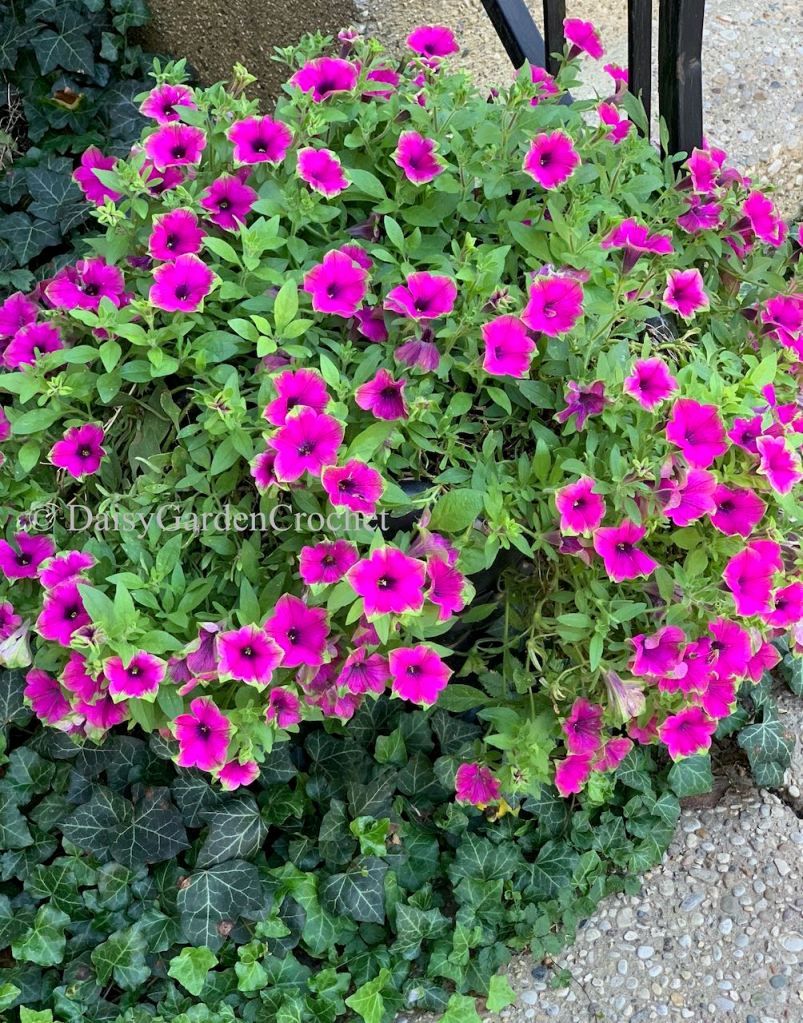
A combination of hand picking and Bt spray saved my petunia, and it started to recover about two weeks later. Now that I know what to look for, I’m hoping that I can nip things in the bud, or budworm, early on next year and avoid the spray altogether. I’ll leave you with a picture of the petunia after about 3 weeks of recovery.
 DaisyGardenCrochet