
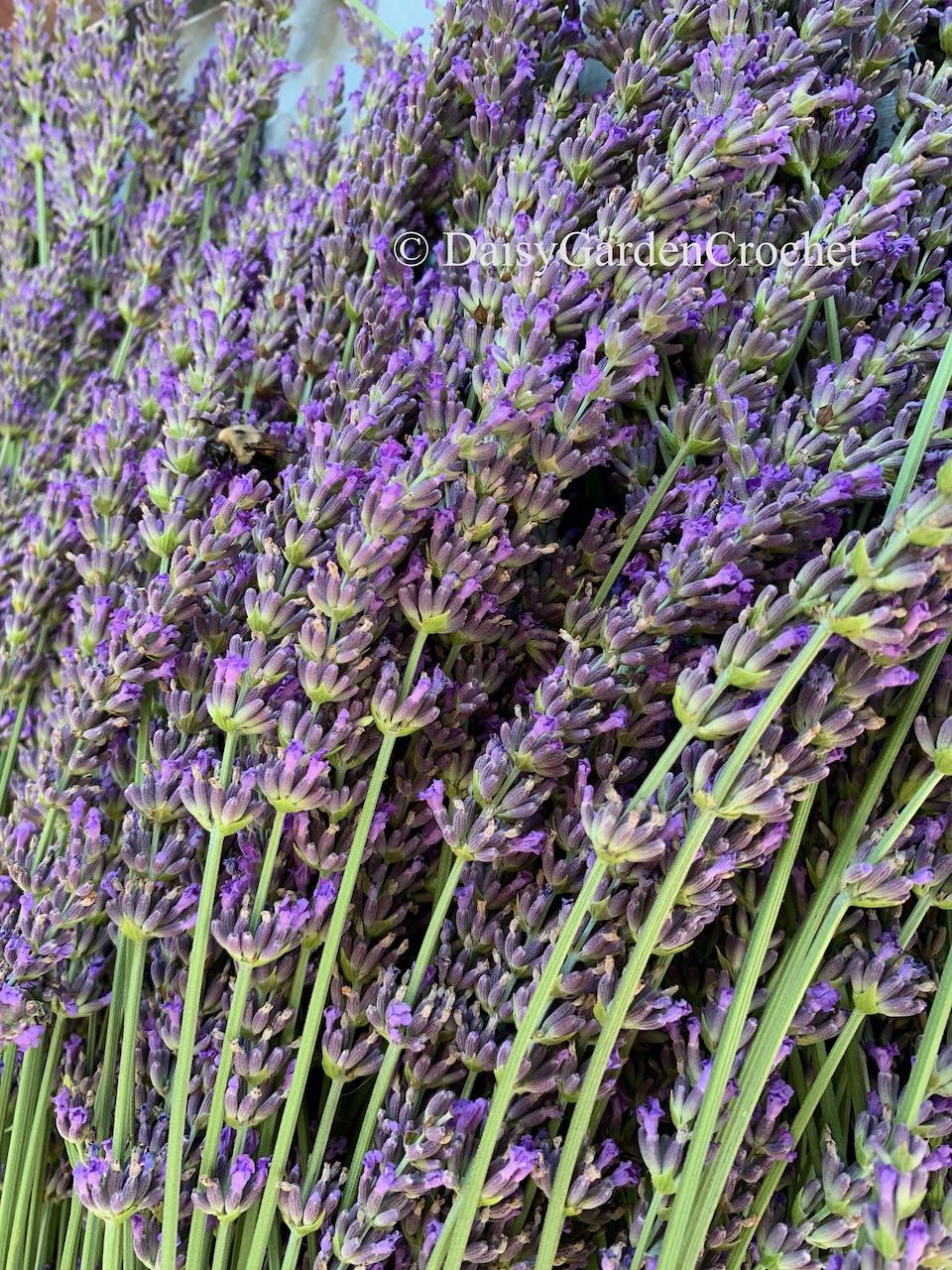
Bee careful for what you wish for is the theme for the day.
As a new empty nester, I was excited to have more time for gardening, and I already had a project in mind. After the kids outgrew the swing set, I transformed the area into my raised bed garden spot. At the time, I did it kind of haphazardly, and it looked junky. It wasn’t very functional either. I had put the beds too close together, and it was hard to work with so little space between each one. After years of looking out the window at the whole mess, I had a clear idea of how to transform it into something beautiful.
I was ambitious. Images of a Provence lavender field danced in my head.
After failed trials of Lavendula x intermedia ‘Grosso’ and various English lavenders (Lavandula anugustifolia) over the years, I happened upon Phenomenal™ lavender. For no particular reason, I planted this variety in the hottest, sunniest, rockiest area of my yard and the results were incredible, and yes, phenomenal. To be fair to L. angustifolia and ‘Grosso,’ both of which I had planted in locations that were either too shady or too moist, part of the success had to do with finally and inadvertently following the mantra “right plant, right place.” In all of the years of trying to grow lavender, I had never done my homework on the plant. I had made some effort, but I have to admit that I was overwhelmed by all of the different names and countries: lavender, lavandin, spike lavender, English lavender, and Portuguese lavender to name a few. With more time to think, I’ve been able to sort out all of the information on lavender in my mind, and hopefully the following explanation helps you too.
First and foremost, all the lavenders fall into the genus Lavandula and most of the plants are native to the Mediterranean region. That’s really the key to thinking about lavender plants. English lavender isn’t really English; it’s Lavandula angustifolia that got its nickname from early cultivation and breeding by English farmers. So, from the plant’s perspective, unlike the moist and shady areas that I chose, the best place to plant lavender is in the most “Mediterranean” area of your garden with full sun and well-drained soil. Many of the best photographs of lavender show it planted in areas surrounded by rock. That was an obvious hint to lavender’s preferred conditions that I clearly overlooked.
Another bit of confusion came with the lavandins. I had a hard time understanding the origin of that name at first, but a bit of history about the lavender oil industry from a paper by Dr. Nigel Urwin helped clarify everything. L. angustifolia produces the highest quality lavender oil used by the perfume industry. Lavandula latifolia (spike or Portuguese lavender) is another species of lavender that produces a lower quality oil that is used in soaps and toiletries. The plants referred to as lavandins, known scientifically as Lavandula x intermedia, are hybrids between L. angustifolia and L. latifolia that can occur naturally when both plants are grown close enough to be cross-pollinated. These hybrids are larger plants with bigger flowers, and most importantly, produce 3 to 5 times the amount of lavender oil. The most well-known variety of this hybrid is the one that I killed, Lavandula x intermedia ‘Grosso,’ which was selected for its resistance to disease.
It turns out that my Phenomenal™ lavender plant was just a patented mutant of ‘Grosso’ more properly named Lavandula x intermedia ‘Niko’ that was discovered by Lloyd and Candy Traven, the owners of Peace Tree Farm in Pennsylvania. This variety that grew so phenomenally for me in one of the hottest, driest spots in my yard made me start dreaming about how I could transform my raised bed garden area into something spectacular.
Bee careful for what you wish for is the theme for today, remember?
At the beginning of the pandemic lockdown, I was actually okay with being stuck at home because I had the raised bed garden project to do. I re-edged the border, planted 14 Phenomenal™ lavender plants around the outer perimeter, and reconfigured the beds. The plants were healthy but didn’t bloom the first year. That was okay because it just gave me something to hope for over the winter. I looked out of the window and imagined the garden perfumed with the scent of lavender, the beautiful purple flower spikes swaying in the breeze, and all of the happy pollinators that I would be helping. The neighbors would swoon and naturalists would thank me for doing my part to save the planet. Think Monty Don meets Hyacinth Bucket. I could barely contain myself as the plants began to spike with blooms in early June. And then it happened, the lavender came into bloom and it was truly phenomenal in more ways than one.
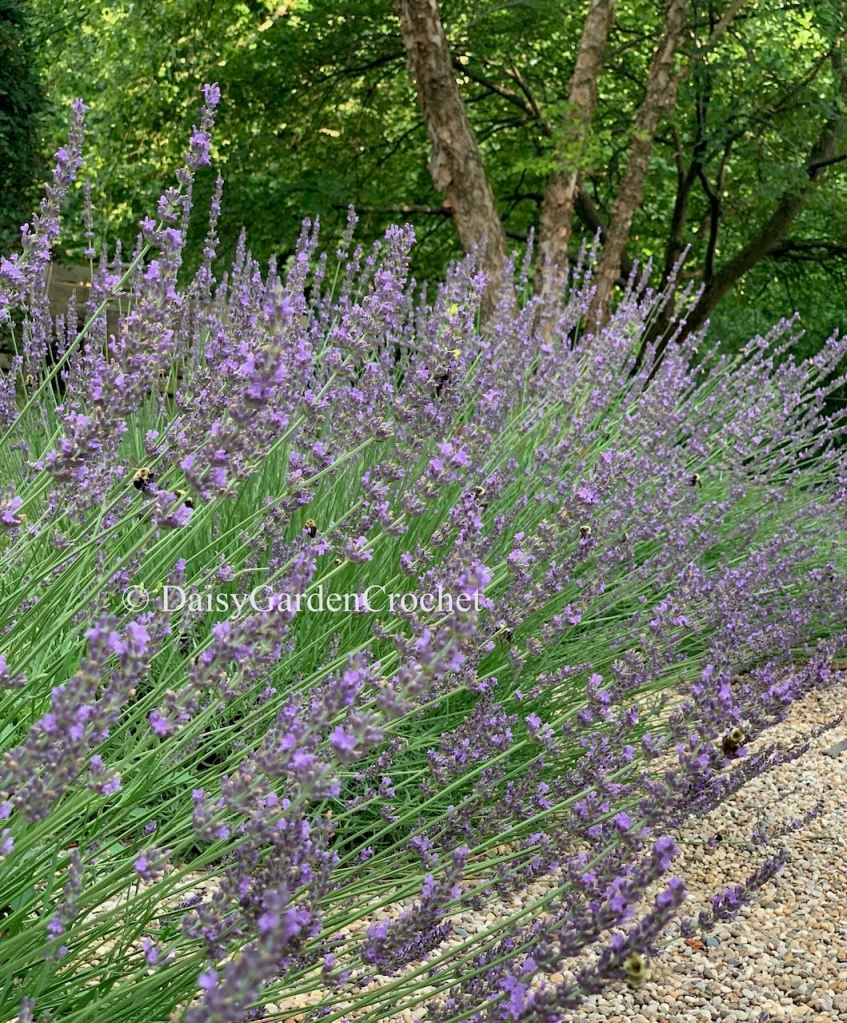
Here’s where we can cue the *record scratch*, *freeze frame* TV trope. Yup, that’s me recognizing that there is one more thing phenomenal about Phenomenal™ lavender. The unbelievable number of bumble bees who love it as much as I do. At the peak of bloom, my husband and I estimated that there were about 250 bees feeding on the lavender plants. Mind you these were happy bees not bothering anyone, but to have so many in such a small area around my raised beds was incredibly intimidating. The sheer volume of the buzzing sound alone was unnerving. I can still feel how my cheeks flamed red with embarrassment when I realized how I hadn’t even considered what that many pollinators would feel like in a suburban backyard garden. Not to mention the worry that it caused about what might happen to kids running through the backyard or to anyone trying to mow around the edge.
My backyard Provence had to be scaled way back. We reconfigured the border by removing 8 of the lavender plants and replacing them with dwarf butterfly bushes. So far it has been an excellent compromise, and it looks beautiful in bloom this summer. I’ll leave you with a picture. How many bees can you spot?
Editor’s Note: In December of 2022, my zone 6b garden experienced an extreme cold temperature event. I lost 2 phenomenal lavender plants and 4 plants needed extensive pruning. Other than this experience, the phenomenal lavender plants have performed exceptionally well in my garden.
 DaisyGardenCrochet